What Is Miserable Malalignment?
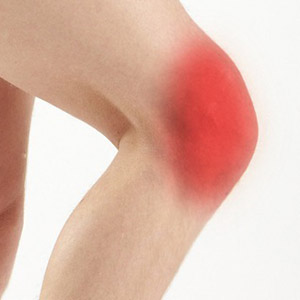
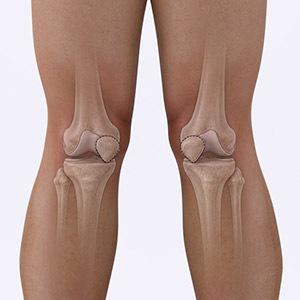
“Miserable malalignment syndrome” describes an abnormal rotational relationship of the lower extremity in which the femur (thigh bone) is excessively internally rotated (increased femoral anteversion) and the tibia (shin bone) may become externally rotated (external tibial torsion). This combination can alter gait mechanics, increase stress across the kneecap (patellofemoral joint), and contribute to pain, instability, cartilage damage, and difficulty with athletic activities.
Patients commonly report:
- Pain around or behind the kneecap
- Recurrent patellar instability or dislocations
- A feeling that the knee collapses inward during activity
- Difficulty running, squatting, or climbing stairs
- Persistent symptoms despite therapy or previous surgery
- Feet that point outward while the knees appear to point inward
Not every patient with abnormal rotational measurements develops symptoms. Treatment decisions are based on symptoms, physical examination findings, imaging studies, and overall limb alignment.
Developmental In-Toeing and Out-Toeing
Many children walk with their feet pointed inward (“in-toeing”) or outward (“out-toeing”) during normal growth and development.
The vast majority improve naturally as they grow.
Studies suggest that:
- In-toeing is common in toddlers and young children.
- Mild increases in femoral anteversion are normal during childhood.
- Most children gradually remodel toward normal adult alignment.
- Only a small percentage continue to have significant rotational abnormalities into adolescence and adulthood.
As adults, most patients have adapted well and remain asymptomatic.
Problems generally arise only when the rotational alignment is severe enough to alter knee mechanics, patellar tracking, gait efficiency, or athletic function.
The important point is that abnormal rotation on a CT scan alone does not necessarily require treatment. Symptoms and function matter more than numbers alone.
Understanding Normal Rotational Alignment:
Femoral Anteversion
Femoral anteversion describes the rotational relationship between the hip and knee.
Typical adult values:
- Normal: approximately 10–20°
- Mildly increased: 20–30°
- Excessive: >30°
As femoral anteversion increases, the entire femur rotates inward.
To keep the feet pointing forward, many patients subconsciously rotate the tibia outward as compensation.
Tibial Torsion
Tibial torsion describes the rotational relationship between the knee and ankle.
Typical adult values:
- Normal external tibial torsion: approximately 20–40°
- Moderate increase: 30–40°
- Severe increase: >40–45°
Importantly, external tibial torsion is often adaptive rather than primary. In many patients, the tibia rotates outward to compensate for excessive internal rotation of the femur. This allows the feet to remain pointed forward during walking despite abnormal rotation occurring higher in the limb.
Because of this compensation, tibial torsion should never be evaluated in Isolation.
What Is Foot Progression Angle?
Foot progression angle is the direction the foot points while walking. A normal gait typically demonstrates:
- Slightly outward foot progression
- Approximately 5–15 degrees of external rotation
This is one of the most important concepts in rotational surgery.
The goal is not simply to make the femur or tibia “normal” on a CT scan.
The goal is to create a normal overall rotational profile that results in:
- Comfortable gait
- Efficient walking mechanics
- Normal patellar tracking
- A natural foot progression angle
Overcorrecting femoral anteversion while ignoring compensatory tibial torsion can create excessive out-toeing and an unnatural gait pattern. For this reason, surgical planning focuses on the entire rotational profile rather than a single measurement.
Relationship to Patellar Instability
Excessive femoral anteversion is one of the most commonly overlooked contributors to recurrent patellar instability.
When the femur rotates inward:
- The kneecap is pulled laterally (toward the outside of the knee)
- The quadriceps mechanism becomes less efficient
- Patellofemoral contact pressures increase
- The risk of patellar subluxation and dislocation increases
Many patients with recurrent patellar instability have previously undergone procedures such as:
- MPFL reconstruction
- Tibial tubercle osteotomy
- Lateral release
While these procedures may be appropriate, failure to recognize significant rotational malalignment can contribute to persistent instability, continued pain, or recurrent dislocation.
In selected patients, correcting the rotational deformity addresses the underlying mechanical problem rather than simply treating the symptoms.
Hip Rotation Examination
One of the most useful clues to excessive femoral anteversion is the hip rotation examination.
With the patient lying on their stomach and the knees bent to 90 degrees, hip rotation can be measured.
Typical adult values:
- Internal rotation: approximately 30–50°
- External rotation: approximately 30–50°
Patients with excessive femoral anteversion often demonstrate:
- Internal rotation of 70–90° or more
- Markedly reduced external rotation
This finding often correlates closely with CT measurements of increased femoral anteversion.
Can Patients Screen Themselves?
Although imaging is required for diagnosis, patients can often recognize certain patterns.
Possible clues include:
- Excessive Hip Internal Rotation: While seated or lying down, many patients notice they can easily rotate their feet outward while the hip rotates inward, often much farther than friends or family members.
- The “W-Sitting” Position: Children with increased femoral anteversion frequently prefer sitting in a “W” position with their knees bent and feet outside their hips.
Although many children outgrow this, some adults continue to demonstrate increased hip internal rotation.
Knees In, Feet Out
One classic appearance is:
- Knees pointing inward
- Feet pointing straight ahead or outward
This occurs because the tibia rotates outward to compensate for the internally rotated femur.
Frequent Patellar Instability
Patients with recurrent kneecap instability, especially after previous stabilization procedures, should consider evaluation for rotational Malalignment.
How Is Miserable Misalignment Evaluated?
Accurate assessment requires more than a physical examination. My evaluation typically includes standing long-leg alignment radiographs
These studies evaluate:
- Mechanical alignment
- Varus or valgus alignment
- Limb length
- Overall lower extremity mechanics
CT Rotational Analysis
CT scanning remains the gold standard for measuring:
- Femoral anteversion
- Tibial torsion
- Side-to-side differences
I routinely compare both extremities because many patients have natural asymmetry. Treatment decisions should be individualized rather than based solely on population averages.
My Philosophy on Surgical Correction
The goal is not simply to normalize a CT measurement.
The objective is to restore balanced limb mechanics while maintaining a natural foot progression angle and efficient gait pattern.
Because tibial torsion is frequently adaptive, correcting one level without considering the other can create new problems.
Treatment recommendations are therefore based on:
- Symptoms
- Physical examination
- Patellar tracking
- Long-leg standing alignment
- CT rotational measurements
- Comparison with the opposite limb
- Overall gait mechanics
- Desired postoperative foot progression angle
Surgical Decision-Making: Isolated Excessive Femoral Anteversion with Normal Tibial Torsion (< 30°)
When excessive femoral anteversion is present and tibial torsion remains within normal limits, a single-level femoral derotational osteotomy is often appropriate.
Goals include:
- Improved patellar tracking
- Reduced instability
- Restoration of more normal rotational mechanics
- Postoperative femoral anteversion of approximately 10–15°
Because tibial rotation remains normal, these corrections generally preserve a normal foot progression angle.
Excessive Femoral Anteversion with Moderate Compensatory External Tibial Torsion (30–40°)
Many patients develop moderate external tibial torsion as compensation for excessive femoral anteversion.
In these situations:
- Femoral correction alone may adequately address patellar instability.
- The foot progression angle may remain mildly externally rotated.
Correction should be tempered to avoid creating excessive out-toeing.
The objective is not maximal correction but rather balanced correction.
Excessive Femoral Anteversion with Severe External Tibial Torsion (>40–45°)
When both deformities are substantial, correction at a single level may not fully restore normal mechanics.
In these cases, double-level correction should be strongly considered:
- Femoral derotational osteotomy
- Tibial derotational osteotomy
This approach can:
- Improve patellar tracking
- Normalize rotational alignment
- Restore a more natural foot progression angle
- Improve gait efficiency
Published studies have demonstrated normalization of gait kinematics and improved patient outcomes following combined femoral and tibial rotational correction in appropriately selected patients.
Is Surgery Always Necessary?
No.
Most patients with mild rotational differences never require surgery.
Treatment is generally reserved for patients with:
- Recurrent patellar instability
- Significant pain
- Functional limitations
- Failure of conservative treatment
- Rotational deformities that clearly correlate with symptoms and examination findings
Many patients improve with:
- Physical therapy
- Hip and core strengthening
- Activity modification
- Bracing when appropriate
- Treatment of associated patellofemoral pathology
Key Takeaway
Rotational malalignment is highly individualized. Successful treatment requires understanding the entire limb rather than focusing on a single number on a CT scan.
My approach combines physical examination, standing alignment radiographs, CT rotational analysis, side-to-side comparison, and gait assessment to identify the true source of symptoms and develop a correction strategy that restores balanced mechanics, improves patellar stability, and preserves a natural foot progression angle.